
Education is changing rapidly. Traditional learning models built around memorization and passive instruction are no longer enough for a world driven by innovation, technology, and constant change. Schools and educators are increasingly exploring approaches that encourage creativity, experimentation, and hands-on learning. This shift has brought greater attention to the maker mindset in education and its role in preparing students for modern challenges.
A maker mindset is more than simply building projects or using technology in classrooms. It is a way of thinking that encourages curiosity, problem-solving, resilience, and learning through creation. In modern education, this mindset is becoming increasingly important because students need skills that go beyond standardized testing and routine learning.
The Evolution of Learning Beyond Traditional Classrooms
Education systems were historically designed around structure, repetition, and standardized outcomes. Students were often expected to absorb information, memorize concepts, and reproduce answers during assessments.
While this approach supported industrial-era workforce needs, modern environments demand different capabilities. Today’s learners need adaptability, collaboration, and innovation skills that cannot develop through passive instruction alone.
As industries evolve rapidly, schools are moving toward experiential and project-based learning models. Students are encouraged to explore ideas, create solutions, and engage directly with real-world challenges.
This shift reflects a broader understanding that learning becomes more meaningful when students actively participate in the process rather than simply receiving information.
Understanding the maker mindset in education
The maker mindset in education refers to a learning approach centered on creativity, experimentation, and hands-on problem-solving. It encourages students to learn by building, designing, testing, and improving ideas.
Instead of focusing only on correct answers, maker-centered learning values exploration and iteration. Students are encouraged to ask questions, try new approaches, and learn through experience.
Curiosity plays a major role in this mindset. Students become active participants in their own learning journey rather than passive observers.
Maker-centered education also differs from traditional instruction because it emphasizes process as much as outcomes. The goal is not simply completing a project but developing critical thinking, adaptability, and confidence through the act of creation.
Core characteristics of a maker mindset
One key characteristic is creative exploration. Students are encouraged to experiment with ideas and discover solutions independently rather than relying entirely on predefined instructions.
Another important element is learning through iteration. Mistakes are treated as part of the learning process rather than signs of failure. Students improve ideas through testing, reflection, and adjustment.
This mindset also promotes independence because learners are expected to take ownership of projects and problem-solving decisions.
Why the maker mindset in education matters today
Modern careers increasingly require creative and adaptable thinking. Many future jobs will involve solving problems that do not yet exist today. This makes the maker mindset especially valuable because it prepares students for uncertainty and continuous change.
The maker mindset in education also supports self-directed learning. Students become more engaged when they have ownership over projects and learning outcomes.
Innovation and entrepreneurial thinking are strengthened as well. Students learn how to identify challenges, generate ideas, and turn concepts into practical solutions.
This approach also improves confidence because learners develop the ability to experiment, adapt, and persist through challenges rather than avoiding them.
The role of hands-on learning in developing maker mindsets
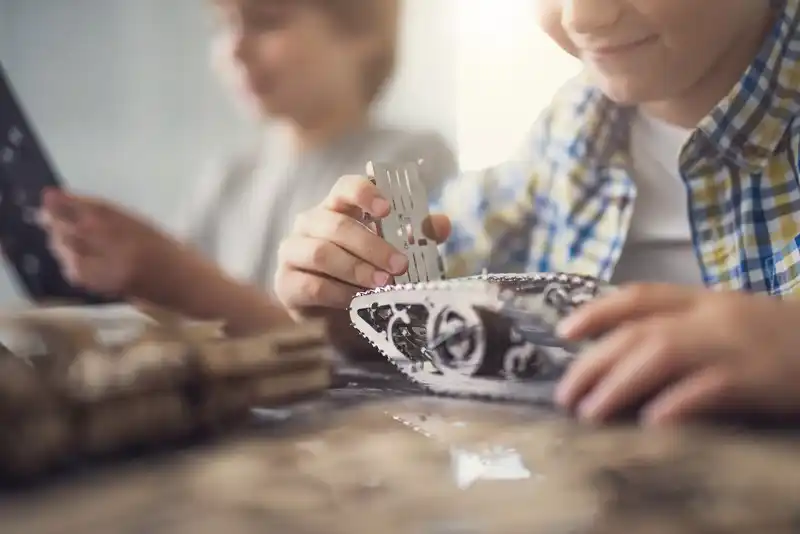
Hands-on learning is one of the foundations of maker-centered education. When students physically create, test, and modify projects, they engage more deeply with concepts.
Research and classroom experience consistently show that practical learning improves knowledge retention. Students understand ideas more effectively when they apply them in meaningful contexts.
Real-world application is another important advantage. Students learn not only theoretical concepts but also how those concepts work in practical situations.
From memorization to active problem-solving
Traditional learning often prioritizes memorization and repetition. While foundational knowledge remains important, these methods alone do not fully prepare students for modern challenges.
Maker-centered learning shifts the focus toward active problem-solving. Students learn how to approach unfamiliar situations, test ideas, and adapt strategies when initial solutions fail.
This process strengthens critical thinking and builds resilience because learners become comfortable navigating uncertainty.
Technology and digital tools in maker-centered education
Technology plays a major role in expanding maker-centered learning opportunities. Coding platforms, robotics kits, digital fabrication tools, and design software allow students to create in new ways.
These tools help students move beyond consuming technology toward understanding and shaping it. Instead of simply using digital systems, learners become creators and innovators.
Technology also encourages collaboration. Students can share ideas, build projects together, and access learning resources from around the world.
However, the value of technology depends on how it is used. Tools should support creativity and problem-solving rather than replacing independent thinking.
The most effective maker-centered classrooms combine digital resources with imagination, experimentation, and design thinking.
How maker mindset learning strengthens future-ready skills
One reason the maker mindset in education is gaining attention is its connection to future-ready skills. Employers increasingly value creativity, adaptability, communication, and collaboration.
Maker-centered learning naturally develops these abilities because students work on projects that require teamwork, experimentation, and iterative thinking.
Resilience is another important skill strengthened through maker education. Students learn that failure is not the end of the process but part of improvement and innovation.
Communication skills also improve because learners often present ideas, explain processes, and collaborate with peers during projects.
These experiences prepare students not only for careers but also for lifelong learning and adaptability.
Challenges schools face when implementing maker education
Despite its benefits, implementing maker-centered learning is not always simple. One major challenge is limited resources. Some schools lack access to technology, materials, or dedicated maker spaces.
Another challenge is resistance to non-traditional teaching approaches. Educators and institutions accustomed to standardized methods may hesitate to adopt more open-ended learning models.
Assessment is also difficult. Creativity and project-based outcomes are harder to measure using traditional grading systems.
Common misconceptions about maker-centered learning
One common misconception is that maker education is only about arts and crafts. In reality, it involves engineering, coding, design thinking, entrepreneurship, and interdisciplinary problem-solving.
Another misconception is that creativity reduces academic rigor. Effective maker-centered learning actually combines creativity with analytical thinking and practical application.
Balancing freedom with educational objectives is important to ensure projects remain meaningful and connected to learning outcomes.
The changing role of teachers in maker mindset environments
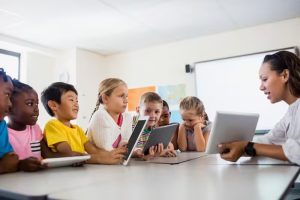
The role of teachers changes significantly in maker-centered classrooms. Instead of acting only as instructors delivering information, teachers become facilitators and mentors.
They guide exploration, encourage questioning, and help students reflect on their learning process. This creates more collaborative learning environments.
Student-led exploration becomes more common because learners are encouraged to investigate ideas independently and take responsibility for project development.
Teachers also play an important role in creating inclusive spaces where students feel safe experimenting and sharing ideas without fear of failure.
Strategies for integrating maker mindset practices into education
Schools can integrate maker-centered learning by creating more project-based and interdisciplinary experiences. Projects that connect multiple subjects help students understand how knowledge applies in real-world contexts.
Encouraging experimentation is also essential. Students should feel comfortable testing ideas and learning from mistakes.
Classroom culture matters significantly. Environments that reward curiosity and innovation are more likely to develop strong maker mindsets.
Professional development for educators is equally important because teachers need support in designing and facilitating maker-centered experiences effectively.
Small changes can also make a difference. Even limited classroom projects that encourage creativity and hands-on problem-solving help shift learning toward more active engagement.
Conclusion
The maker mindset in education reflects a broader transformation in how learning is understood. Modern education is moving away from passive instruction toward active creation, experimentation, and problem-solving.
This shift matters because future success increasingly depends on adaptability, creativity, and innovation rather than memorization alone.
Maker-centered learning helps students become confident thinkers who can approach challenges with curiosity and resilience. It prepares learners to navigate uncertainty, collaborate effectively, and continuously develop new skills.
As education systems continue evolving, the maker mindset will likely become even more important. It is not simply a teaching trend. It is a response to a world where learning by making is becoming one of the most valuable ways to prepare for the future.