
Education is changing quickly as technology becomes a central part of everyday life. Classrooms are no longer limited to textbooks and lectures. They now include digital tools, interactive platforms, and technology-driven learning methods. In this environment, coding for students has emerged as one of the most important additions to modern education systems.
Coding is no longer viewed as a specialized technical skill reserved for software engineers. It is now considered a foundational literacy that helps students understand how digital systems work and how they can actively participate in shaping technology instead of only using it.
The importance of coding for students is growing because it builds skills that go far beyond computers. It strengthens logical thinking, creativity, problem-solving, and adaptability, all of which are essential in a rapidly changing world.
The Rise of Digital Literacy in Modern Education Systems
Digital literacy has become as important as traditional reading and writing skills. Students today grow up in environments surrounded by smartphones, apps, and online platforms. Understanding how these systems work is becoming a basic requirement for participating in modern society.
Schools are increasingly expected to prepare students not only for exams but for a digital-first world. This includes teaching them how to interact with technology critically and creatively.
The rise of automation, artificial intelligence, and digital communication has also increased the demand for students who understand the logic behind technology. Coding provides a structured way to develop this understanding.
Unlike traditional subjects that focus mainly on content absorption, coding encourages students to think about how systems are built and how problems are solved step by step. This makes it a powerful tool for modern education.
Understanding the importance of coding for students
The importance of coding for students lies in its ability to develop both technical and cognitive skills. Coding is not just about writing instructions for computers. It is about learning how to think logically, break problems into smaller parts, and create structured solutions.
When students learn coding, they are essentially learning how to approach complex problems in a systematic way. This mindset is valuable across all subjects, not just computer science.
Coding also helps students understand the digital world they interact with daily. From mobile apps to online games and websites, programming is the foundation of modern technology. When students learn coding, they gain insight into how these systems function.
Coding as a language of the future
Coding is often described as a language of the future because it allows communication with machines in a structured and logical way.
Just like learning a spoken language helps students communicate with people, learning coding helps them communicate with computers and digital systems.
Early exposure to coding builds familiarity and reduces fear of technology. Students become more confident when interacting with digital tools and more capable of exploring advanced concepts later in life.
This confidence is especially important as many future careers will require at least a basic understanding of programming logic.
Why schools are integrating coding into STEAM learning
Schools are increasingly integrating coding into STEAM education, which combines science, technology, engineering, arts, and mathematics. This interdisciplinary approach helps students connect ideas across different subjects.
Coding plays a central role in STEAM learning because it acts as a bridge between theory and practical application. Students can use programming to simulate scientific experiments, design engineering solutions, or create digital art.
This integration makes learning more engaging and meaningful. Instead of learning subjects in isolation, students see how knowledge connects across disciplines.
It also prepares students for real-world problem-solving, where challenges rarely fall into a single subject category.
The importance of coding for students becomes even more clear when they apply programming to solve creative and scientific problems in integrated learning environments.
Cognitive and academic benefits of learning coding at school
Coding has significant cognitive benefits for students. It strengthens logical reasoning by requiring learners to follow structured steps and understand cause-and-effect relationships.
It also improves analytical thinking. Students must identify problems, break them down, and design solutions in a clear sequence.
Creativity is another important benefit. Coding allows students to build games, animations, and interactive projects, encouraging them to express ideas in innovative ways.
Focus and patience are also developed through programming tasks. Students learn that solving problems often requires persistence, testing, and refinement.
Coding and improved academic performance
Coding supports learning in other academic subjects as well. For example, it strengthens mathematical thinking by reinforcing patterns, sequences, and logical operations.
In science education, coding helps students simulate experiments and visualize complex concepts. This makes abstract ideas easier to understand.
Coding also improves abstract thinking skills, which are essential for subjects that require conceptual understanding rather than memorization.
These benefits contribute to overall academic improvement and deeper learning engagement.
How coding changes the way students learn and think
One of the most important impacts of coding education is the shift in how students approach learning. Traditional learning often focuses on memorization and repetition.
Coding encourages active creation instead of passive consumption. Students are not just receiving information. They are building something with it.
This change promotes deeper engagement. Students become more curious and motivated when they can see the results of their work in real time.
Coding also encourages experimentation. Students try different approaches, test solutions, and refine their work based on outcomes.
This process helps develop resilience because students learn that failure is part of improvement rather than something to avoid.
Different ways coding is taught in schools today
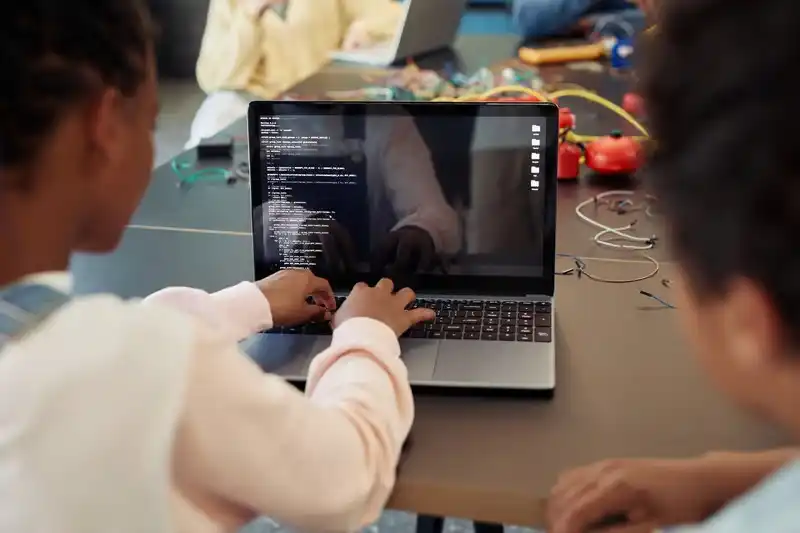
Modern schools use a variety of methods to teach coding for students. One of the most common approaches is block-based programming, which uses visual blocks instead of complex text-based syntax.
This method is ideal for younger learners because it simplifies coding concepts and focuses on logic rather than technical details.
As students advance, they are introduced to text-based programming languages. These allow for more complex projects and deeper understanding of coding structures.
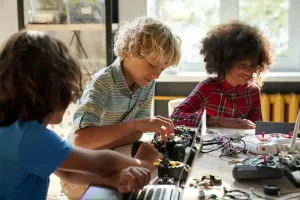
Robotics and game-based learning are also widely used. These methods make coding more interactive and engaging by connecting programming to physical or visual outcomes.
The role of project-based learning in coding education
Project-based learning plays a major role in effective coding education. Instead of learning isolated concepts, students work on complete projects such as games, apps, or simulations.
This approach increases engagement because students can see real results from their efforts.
It also encourages teamwork and collaboration. Many coding projects require students to work together, share ideas, and solve problems collectively.
This collaborative environment helps develop communication skills alongside technical abilities.
Challenges schools face in teaching coding effectively
Despite its benefits, teaching coding for students comes with several challenges. One major issue is limited access to technology. Not all schools have sufficient devices or infrastructure to support coding education.
Another challenge is the lack of trained educators. Teaching coding effectively requires both technical knowledge and pedagogical skills.
Student engagement can also vary widely. Some students may find coding exciting, while others may struggle with frustration when concepts become complex.
Maintaining consistent interest across different skill levels requires careful planning and adaptive teaching methods.
The role of teachers and curriculum designers in coding education
Teachers play a critical role in making coding accessible and meaningful for students. They act as facilitators who guide students through exploration rather than simply delivering instructions.
Curriculum designers also play an important role by creating age-appropriate learning pathways that gradually build coding skills.
Effective coding education requires integration with existing subjects rather than treating programming as a completely separate discipline.
When teachers connect coding with real-world examples and academic subjects, students understand its relevance more clearly.
This makes learning more meaningful and sustainable.
How coding prepares students for future careers
The importance of coding for students extends beyond the classroom. Coding skills are increasingly relevant across a wide range of industries.
Even careers that are not directly related to technology now benefit from digital literacy and programming knowledge.
Coding also helps students develop adaptability. As technology continues to evolve, students who understand programming concepts can learn new tools and systems more easily.
It also encourages innovation and entrepreneurship. Students who learn coding early are better equipped to create digital products, solve real-world problems, and explore creative ideas.
This makes them more prepared for a future job market that values flexibility and innovation.
Conclusion
Coding is becoming a core part of modern education systems because it develops essential skills for the future. The importance of coding for students goes far beyond technical knowledge.
It builds logical thinking, creativity, problem-solving abilities, and adaptability. These skills are valuable in almost every field and prepare students for a rapidly changing world.
As schools continue to integrate coding into STEAM education, students gain more opportunities to engage with technology in meaningful ways.
Ultimately, coding is not just about preparing students for technology careers. It is about preparing them for a future where understanding and creating with technology is a fundamental part of life.