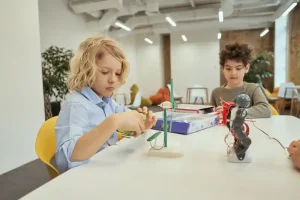


Modern challenges are more complex than ever. Businesses face rapid technological shifts, students prepare for unpredictable careers, and professionals constantly adapt to changing environments. In this reality, traditional methods are often not enough. Organizations and individuals need the ability to think differently, adapt quickly, and generate effective solutions under uncertainty. This is why understanding why is creative problem solving important has become increasingly relevant in education, leadership, and business strategy.
Creative problem-solving is not limited to artistic thinking or innovation labs. It is a practical skill that helps people approach problems from new perspectives, challenge assumptions, and discover solutions that standard processes may overlook.
The Growing Complexity of Problems in Modern Environments
The world is changing at a pace that many systems struggle to keep up with. Digital transformation, automation, globalization, and economic uncertainty are reshaping how decisions are made. Problems today are rarely isolated or straightforward. They are interconnected and constantly evolving.
Traditional problem-solving methods often rely on predictable patterns and past experiences. While these approaches work for routine tasks, they become less effective when situations are uncertain or rapidly changing.
Modern environments require adaptability. Individuals and organizations must respond to challenges that may not have clear solutions or established frameworks. This is where creative problem solving becomes essential because it encourages flexibility and unconventional thinking.
Businesses now compete not only on efficiency but also on their ability to innovate and adapt faster than competitors. Creative thinking has become a strategic advantage rather than a secondary skill.
Understanding why is creative problem solving important in today’s world
The reason why is creative problem solving important lies in its ability to improve how people approach uncertainty and complexity. Instead of focusing only on obvious answers, creative problem solving explores multiple possibilities and perspectives.
Analytical thinking focuses on logic, structure, and evaluation. Creative thinking adds imagination, experimentation, and exploration. Both are important, but creativity allows people to move beyond predictable solutions.
Creative problem solving also improves innovation potential. It encourages individuals to identify hidden opportunities, rethink assumptions, and create solutions that generate long-term value.
In workplaces, this ability is especially valuable because many modern challenges require collaboration across different disciplines and viewpoints.
The shift from routine execution to adaptive thinking
Automation and artificial intelligence are changing the nature of work. Repetitive and rule-based tasks are increasingly handled by machines. As a result, human value is shifting toward skills that technology cannot easily replace.
Creative thinking is one of those skills. Machines can process information quickly, but humans remain stronger at imagination, contextual understanding, and unconventional reasoning.
This shift means organizations increasingly prioritize employees who can adapt, experiment, and solve unfamiliar problems rather than simply follow procedures.
The core stages of effective creative problem solving
Creative problem solving is often misunderstood as random brainstorming. In reality, it is a structured process that combines creativity with critical thinking.
The first stage is identifying the real problem. Many organizations focus on symptoms instead of root causes. Creative problem solving requires reframing the issue to understand what challenge actually needs to be solved.
The second stage involves generating ideas and exploring alternatives. At this point, quantity matters because a wider range of ideas increases the likelihood of finding innovative solutions.
The final stage is evaluation. Ideas are analyzed, refined, and tested to determine which solutions are practical and effective. The key is balancing creativity with feasibility.
This process helps organizations avoid narrow thinking and encourages more strategic decision-making.
How creative problem solving supports innovation and growth
Innovation depends heavily on creative problem solving. New products, services, and processes often emerge when people challenge conventional assumptions and explore alternative approaches.
Organizations that encourage creative thinking tend to adapt more effectively to market changes. They are also more likely to identify opportunities before competitors.
Creative problem solving supports continuous improvement because it encourages experimentation rather than maintaining outdated methods simply because they are familiar.
Why innovation depends on creative thinking
Innovation rarely comes from repeating existing processes. It comes from questioning limitations and imagining different possibilities.
Creative thinking allows businesses to identify unmet customer needs, improve operational efficiency, and discover new revenue opportunities. Without creativity, organizations often become stagnant and reactive instead of proactive.
Fresh perspectives also reduce the risk of groupthink, where teams become trapped in repetitive decision-making patterns.
The role of collaboration in creative problem solving
Collaboration plays a major role in effective problem solving because diverse perspectives generate broader ideas and insights.
Teams with different backgrounds, experiences, and expertise are often better at identifying creative solutions. Diversity of thought increases the range of possible approaches and reduces blind spots.
Psychological safety is especially important in collaborative environments. People must feel comfortable sharing unconventional ideas without fear of criticism or rejection.
Organizations that encourage open discussion and experimentation tend to generate stronger solutions because employees are willing to contribute more freely.
Balancing structure and freedom is also essential. Too much structure limits creativity, while too little direction can lead to confusion. Effective leaders create frameworks that encourage innovation while maintaining focus.
Creative problem solving in education and professional development
Educational systems and workplaces increasingly recognize creativity as a core future skill. Memorization and routine execution are becoming less valuable compared to adaptability and problem-solving ability.
Modern learning environments are shifting toward experiential approaches that encourage experimentation, collaboration, and critical thinking.
Professional development programs also focus more on creativity because employees must continuously adapt to new technologies and changing job expectations.
Creative problem solving prepares individuals for uncertainty. Instead of relying only on fixed knowledge, people learn how to approach unfamiliar challenges with confidence and flexibility.
Common barriers that limit creative problem solving
Despite its importance, many organizations struggle to encourage creativity. One major barrier is fear of failure. Employees may avoid taking risks if mistakes are punished harshly.
Rigid systems and excessive bureaucracy also limit experimentation. When organizations focus too heavily on rules and efficiency, employees may hesitate to explore unconventional ideas.
Workplace culture plays a major role as well. Teams that discourage questioning or challenge only a small range of viewpoints often struggle with innovation.
How cognitive bias affects creative thinking
Cognitive bias is another major obstacle. People naturally rely on familiar assumptions and patterns when making decisions.
This can limit creativity because individuals may reject new ideas too quickly or overlook alternative perspectives.
Questioning assumptions is essential for creative problem solving. Organizations that encourage curiosity and open-minded thinking are better positioned to innovate.
Strategies to strengthen creative problem-solving abilities
Creative thinking can be developed through intentional practice. One effective strategy is encouraging curiosity. People who actively explore new ideas and experiences tend to become more flexible thinkers.
Brainstorming and design-thinking methods also help teams generate and refine ideas more effectively. These approaches encourage experimentation without immediate judgment.
Continuous learning is equally important. Exposure to different industries, disciplines, and perspectives expands creative capacity.
Organizations can also strengthen creativity by creating environments where employees feel safe sharing ideas and testing new approaches.
Small changes in workplace culture often produce significant improvements in innovation over time.
Technology’s influence on creative problem solving today
Technology has transformed how people solve problems. AI tools, data analytics, and digital collaboration platforms provide access to information and insights faster than ever before.
These tools can support creativity by helping teams analyze trends, simulate scenarios, and explore possibilities more efficiently.
However, overdependence on automation can also limit creative thinking. If individuals rely entirely on algorithms, they may stop questioning assumptions or exploring unconventional approaches.
The most effective organizations combine technological capabilities with human creativity. Technology enhances efficiency, while people provide imagination, context, and emotional understanding.
This balance is becoming increasingly important as AI systems continue to evolve.
Conclusion
The importance of creative problem solving continues to grow as the world becomes more complex and unpredictable. Businesses need innovative thinkers to remain competitive. Educational systems need adaptable learners prepared for changing careers. Leaders need teams capable of solving unfamiliar challenges.
Understanding why is creative problem solving important is ultimately about recognizing that future success depends on adaptability and innovation. Technical knowledge alone is no longer enough.
Creative problem solving helps individuals and organizations navigate uncertainty, identify opportunities, and respond to change with confidence. In modern environments, it is no longer a specialized ability. It is becoming one of the most valuable skills for long-term growth and resilience.